
[Exclusive] China Swallows the West Sea… Builds ‘Eight Major Naval Fortresses’
By Kim Hyun-woo, Women’s Economy Newspaper
China’s Navy, the Principal Adversary in the Korean War, Establishes Eight Key Bases
Qingdao and Dalian Built as Carrier Strike Group Hubs
Underground Tunnels Used to Conceal Nuclear Submarines
Maritime Encirclement Aimed at the Korean Peninsula Completed
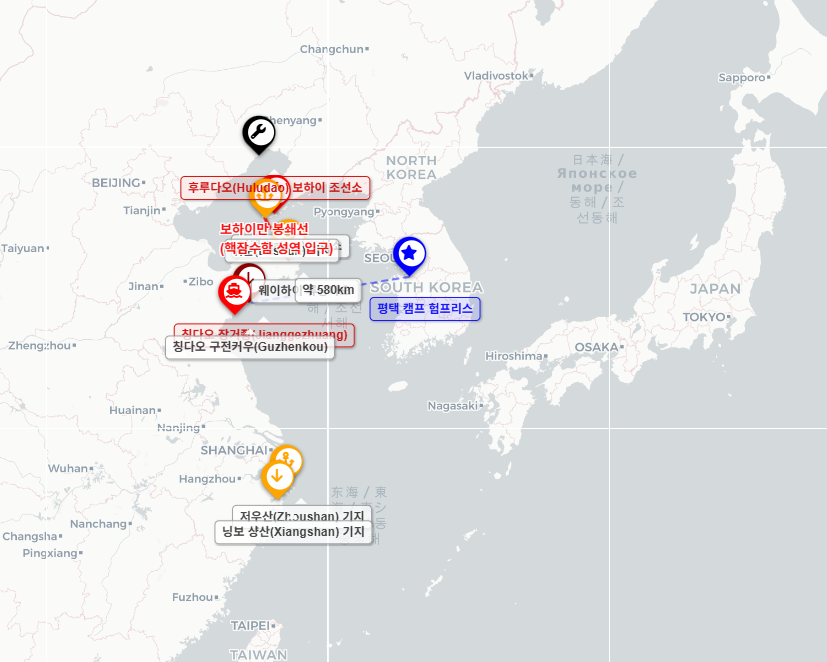
Satellite data analysis has revealed that China is transforming the West Sea (Yellow Sea) into a “bastion,” an aggressive strategic stronghold under its control.
According to a comprehensive analysis conducted by Women’s Economy Newspaper on the 12th, based on Google Earth satellite imagery and reports from the China Maritime Studies Institute (CMSI) at the U.S. Naval War College, China has constructed a dense maritime encirclement through eight core naval bases stretching from Bohai Bay in the north to areas near Shanghai in the south. Major hubs such as Qingdao, Dalian, and Ningbo have built massive infrastructure designed to support carrier strike group operations.
Satellite analysis indicates that China’s naval ambitions are most clearly exposed at the Gǔzhènkǒu Base in Qingdao and the Dalian Shipyard.
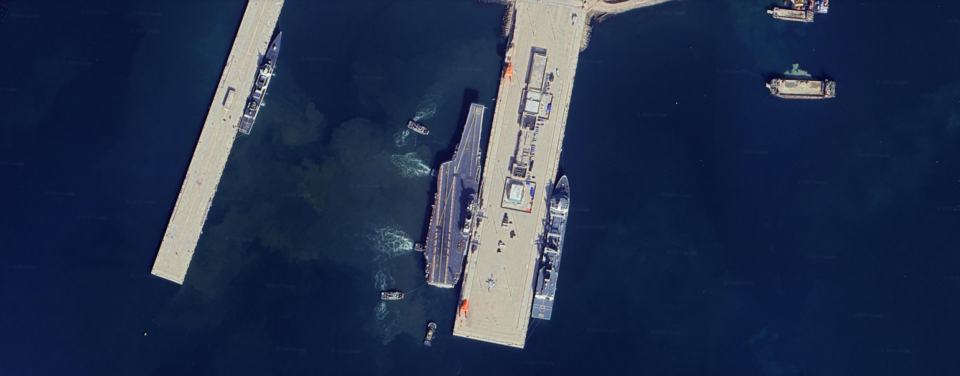
△ Qingdao Gǔzhènkǒu Base
Satellite images show piers large enough to berth two aircraft carriers simultaneously, including the Liaoning and Shandong. According to the China Power Project at the Center for Strategic and International Studies (CSIS), the base is equipped with large dry docks capable of accommodating carrier-class vessels, as well as dedicated zones for Type 055 Renhai-class destroyers and Type 901 fast combat support ships. This indicates that the base functions as a forward operating base (FOB) where carrier strike groups integrate combat power and complete pre-deployment preparations. In effect, the southern edge of Qingdao has become China’s launch line for offensive operations into the Pacific.
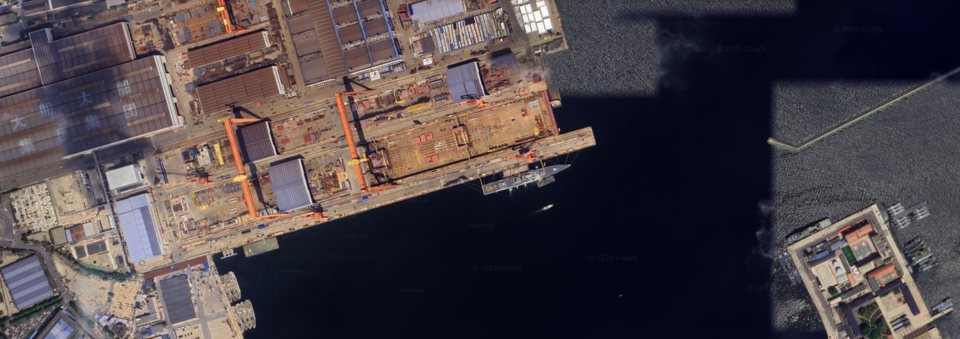
△ Dalian Shipyard
Identified in the U.S. government’s China Military Power Report (CMPR) issued on October 19, 2023, as a core hub of China’s naval expansion. The shipyard handled both the refit of the Liaoning and the construction of the Shandong, and is currently capable of simultaneously building, maintaining, and repairing next-generation aircraft carriers. It is regarded as a model case and frontline example of China’s “military–civil fusion” strategy. According to analyses by Japan’s National Institute for Defense Policy Studies (NIPPS) and others, structures believed to be intended for the installation of reactor containment vessels were identified at the construction site.
The maritime defense network and submarine forces of China’s Northern Theater Command have been built in a covert yet meticulous manner. A posture of ironclad defense is particularly notable.
△ Lüshun Base
Utilizing the naturally fortified terrain known as the “Tiger’s Tail,” the base has been transformed into a natural fortress. Type 052D destroyers are deployed to block the entrance to Bohai Bay.
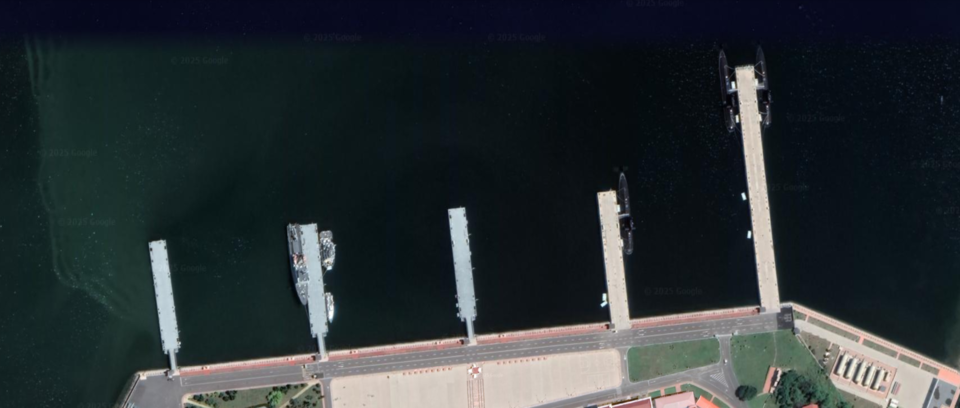
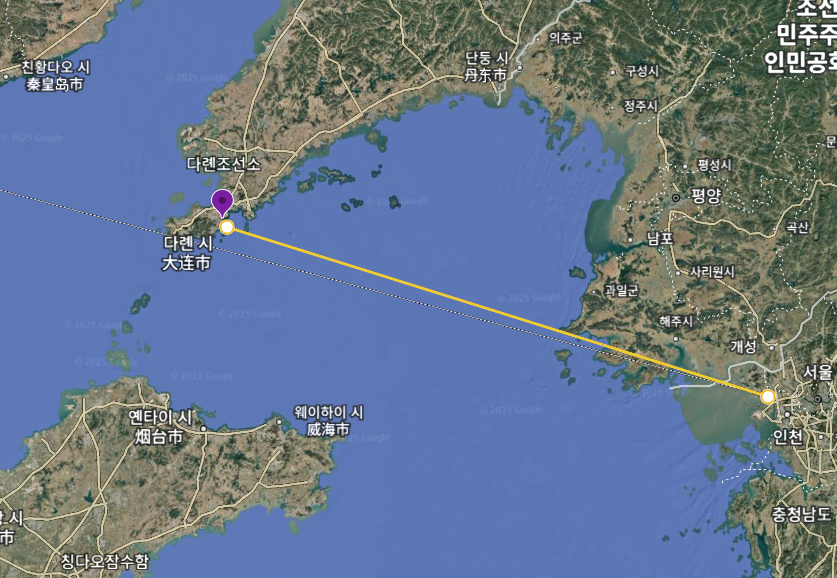
Undersea capabilities pose an especially serious threat.
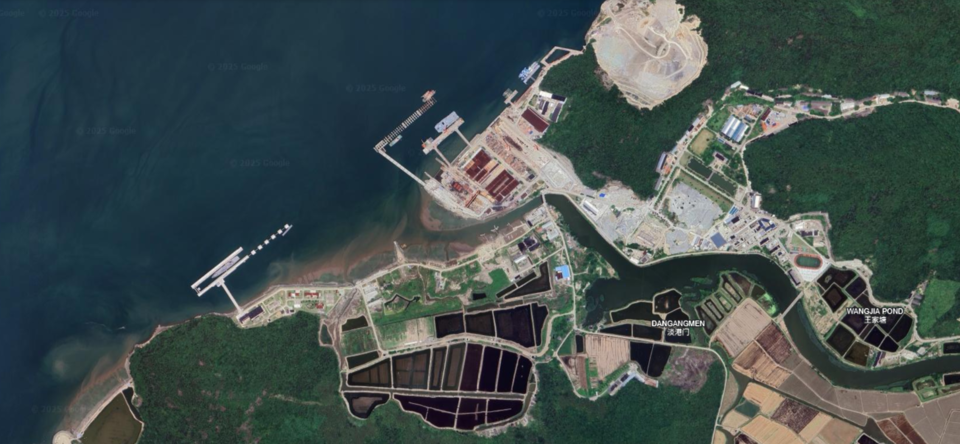
△ Qingdao Zhanggezhuang Submarine Base
This base features massive underground tunnels carved through mountainous terrain. Submarines can enter under their own power while surfaced, allowing armament loading and sortie preparations to take place inside facilities beyond the reach of satellite surveillance.
△ Huludao Bohai Shipyard
Capable of constructing two to four submarines simultaneously, the shipyard has the capacity to produce nuclear-powered attack submarines on an annual basis.
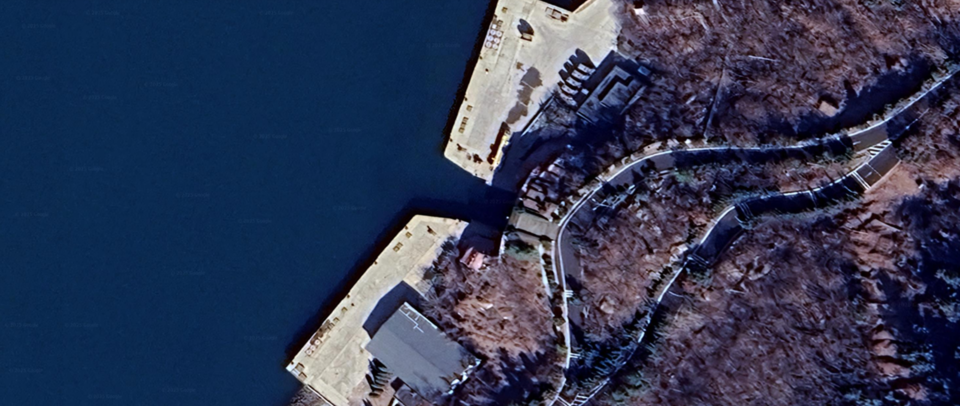
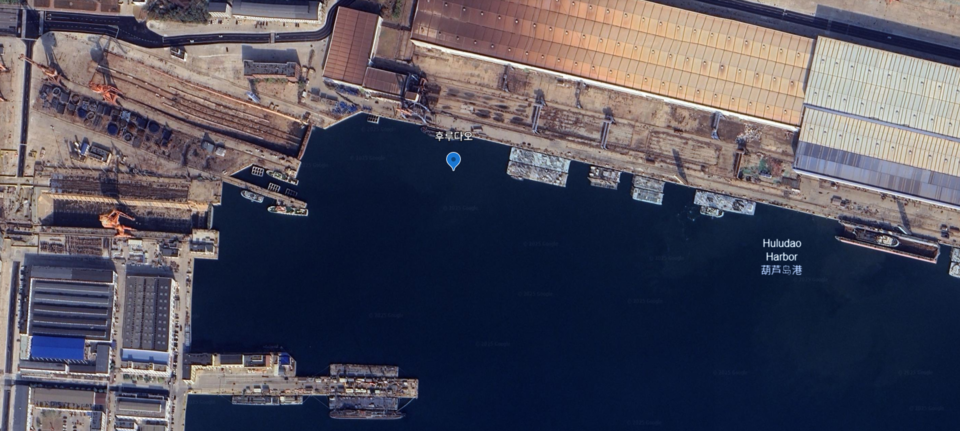
Turning southward, the Zhoushan Base and Ningbo Xiangshan Base under the Eastern Theater Command are oriented toward the East China Sea.
△ Zhoushan Base
Home to the East Sea Fleet Command, the entire island has been fortified into a massive naval complex. Type 055 destroyers and Sovremenny-class destroyers—key assets for blockading the Taiwan Strait—are concentrated here.
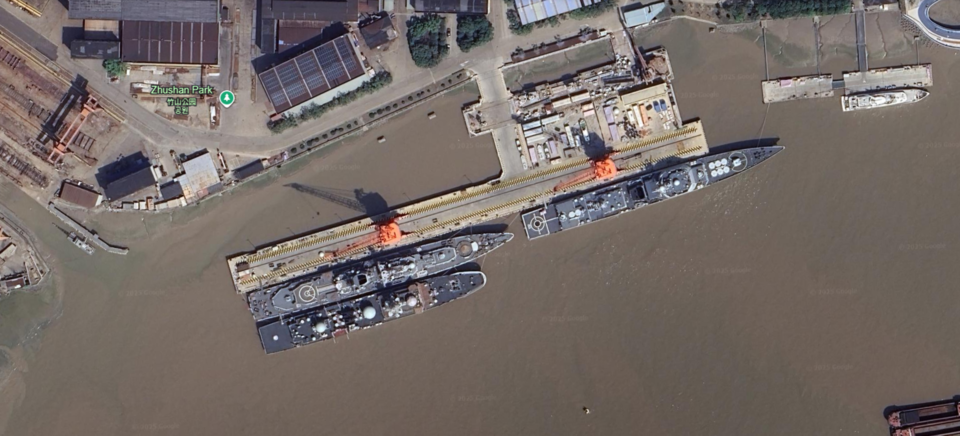
△ Ningbo Xiangshan Base
Taking advantage of a complex coastline and surrounding islands, this base serves as a hub for Kilo-class and Yuan-class conventional submarines. Yuan-class submarines equipped with Stirling engine–based air-independent propulsion (AIP) systems can remain submerged for weeks, guarding key maritime chokepoints in the Taiwan Strait. The base also possesses underground tunnel facilities, enhancing survivability.
Security experts agree that the force posture across these eight bases demonstrates China’s determination to turn the West Sea into its own “internal waters.” While South Korea remains preoccupied with North Korea’s nuclear threat, China has been fortifying the entire West Sea, encroaching on the operational space of the ROK–U.S. alliance. Experts stress the urgent need to expand surveillance and reconnaissance assets and to establish refined response manuals to prepare for potential accidental clashes in the West Sea.
Professors Toshi Yoshihara and James Holmes of the U.S. Naval War College have argued in their books and academic papers that China’s naval buildup represents a modern adaptation of Alfred Thayer Mahan’s theory of sea power. Professor Yoshihara noted, “If China succeeds in unifying Taiwan, the West Sea, East China Sea, and South China Sea would be linked into a single integrated operational theater, enabling the Chinese navy to truly transform into a blue-water navy.”
☞ A2/AD (Anti-Access/Area Denial)
A military concept combining “anti-access,” which prevents enemy forces from entering friendly operational areas, and “area denial,” which restricts their freedom of movement. It is a core Chinese strategy designed to block superior forces—such as U.S. carrier strike groups—from approaching nearby waters such as the West Sea and the Taiwan Strait.
This article was originally published in Korean.
Original article: https://www.womaneconomy.co.kr/news/articleView.html?idxno=248188#_mobwcvr